
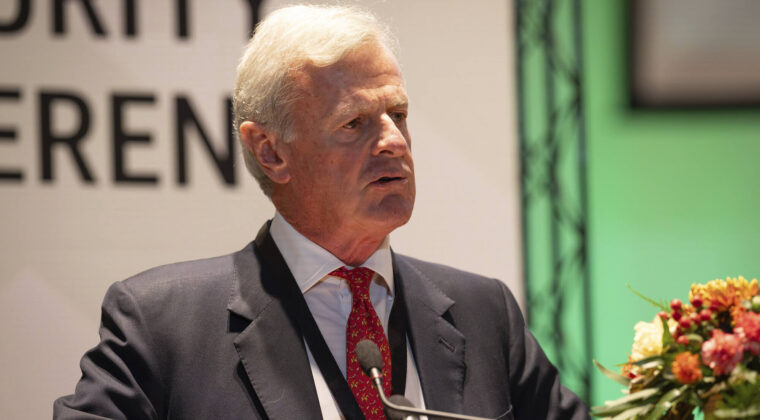
Kouvola Security Conference delivered some hard-hitting truths, backed by an impressive lineup of speakers. The theme of the high-level September event was ‘The New Security Reality – How do we build trust in a secure future in Finland?’
This year, the Kouvola Security Conference experienced something akin to a “British Invasion” as retired NATO General Sir Richard Shirreff and the British Ambassador to Finland, Laura Davies, took to the stage.
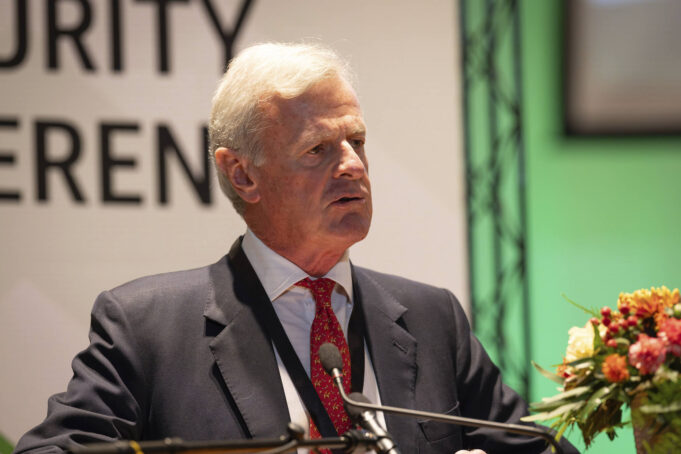
General Shirreff, who delivered the event’s most fiery remarks, hurled razor-sharp messages towards both “war criminal Putin” and “narcissist Trump”. According to Shirreff, it is glaringly obvious that Trump’s negotiators on Ukraine get their marching orders from Moscow.
“Trust in America is broken,” stated Shirreff, for whom the matter is deeply personal and painful. The General spoke of having proudly served alongside his American brothers-in-arms around the world; yet he cannot remain silent while the current US administration dismantles everything they built together.
Shirreff believes Europe has failed to prepare for the gathering storm — with the exception of Finland, which he cites as a model for cool-headed, realistic action amidst crises. Not surprisingly, the pull-no-punches speech received the day’s most thunderous applause.
Just put the kettle on?
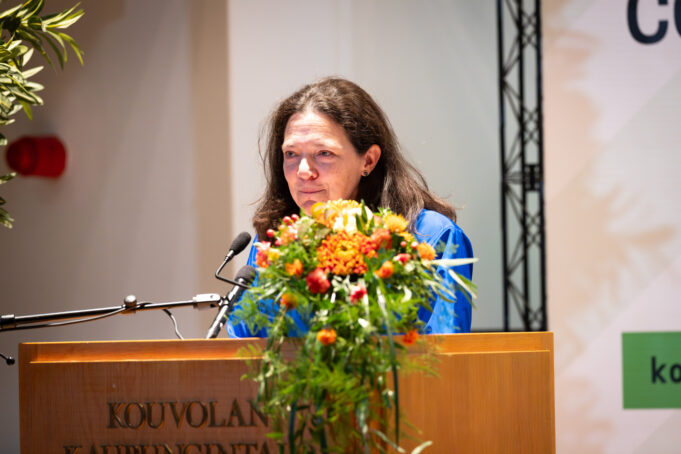
Ambassador Laura Davies shared her compatriot’s views, noting that while resilience in the UK primarily means boiling water for tea, in Finland the scope is considerably broader.
“In Finland’s comprehensive security model, resilience is a form of continuous preparedness,” observed Davies, who — like Shirreff — is a huge fan of Finland. The ambassador also pointed out that in the era of hybrid warfare, risks no longer arrive as single spies but, instead, as battalions.
“Finland understands the price of freedom,” Davies summed up.
Agency comes first
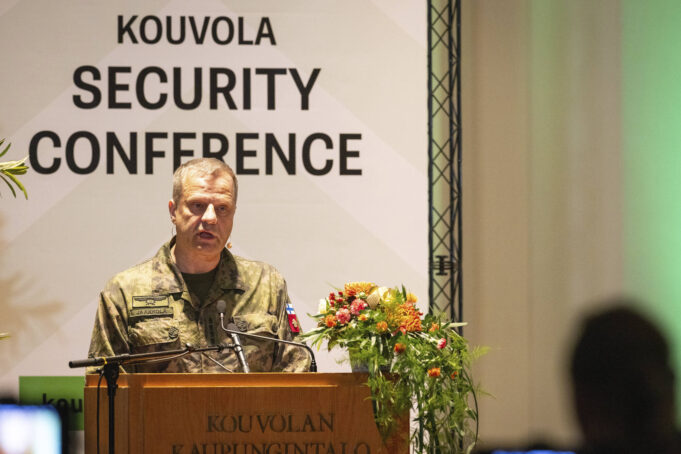
The event was opened by the Commander of the Finnish Defence Forces, General Janne Jaakkola, who was a shade more analytical than the spirited Britons. Jaakkola reminded the audience that military capability — no matter how effective — does not operate in a vacuum; it rests on the foundation of public trust. We live in times where no one possesses the full view of the unfolding situation; yet Finland’s national deterrence and defense must remain top notch via uncertainly, too.
“Resources alone do not translate to defence capability,” Jaakkola pointed out.
According to the Commander, Finland will be able to hold her own, provided that — even under pressure — the country maintains its agency, cooperates with partners, and makes wise choices.
Industry is the anchor
General Jaakkola also spoke about the deepening cooperation between the Defence Forces and the business sector. One of the cornerstones of the national defense sector is Patria, and its CEO, Panu Routila, gave a keynote speech addressing the recent development in the field. Routila noted that no single technology decides the outcome of a war; rather, it is the ability to combine various technologies that wins the day.
“Security is not born of reactions, but of preparedness that is built well before a crisis strikes.”
Routila believes that Finland possesses a strong industrial foundation that can be relied upon in a tight spot. However, it must always be remembered that supplying the front line is a crucial part of operational capability — and one that must be safeguarded.
When all hell breaks loose
Amidst the interesting panel discussions of the day, a crisis simulation stood out; it allowed panelists to analyze a scenario in which Russia targeted Finland after a shaky cease-fire in Ukraine. A prolonged period of escalating tensions ensues, finally erupting into full-scale, bloody war. The immersive war simulation surely left no one in the audience indifferent.
The intense crisis simulation made the panelists question the values of the home front. While Janne Känkänen, CEO of the National Emergency Supply Agency, believed that citizens’ selfless behavior would increase in the crisis, Erja Yläjärvi, Editor-in-Chief of Helsingin Sanomat, took a different view:
“Solidarity crumbles in a crisis,” she said.
How safe is Finland?
The afternoon program culminated in a highly anticipated panel featuring representatives from parliamentary parties, discussing the future of national security policy. Minister of Defence Antti Häkkänen (NCP) stood on firm strong ground discussing the core tenets of his sector, yet he faced a tenacious challenger in Left Alliance Chair Minja Koskela.
No party disagreed that Russia is the Number One security threat to Finland, though different parties chose to emphasize different facets of the challenge. Minister of Agriculture and Forestry Sari Essayah (CD) voiced a view shared by many of her colleagues: Russia is deliberately seeking to blur the line between war and peace.
Defence Minister Häkkänen was not overly concerned:
“We have comprehensive situational awareness of the threats, and there are no security gaps in Finland,” Häkkänen stated. Furthermore, a “massive number” of industrial projects aimed at strengthening the national defence capabilities are already in the pipeline.
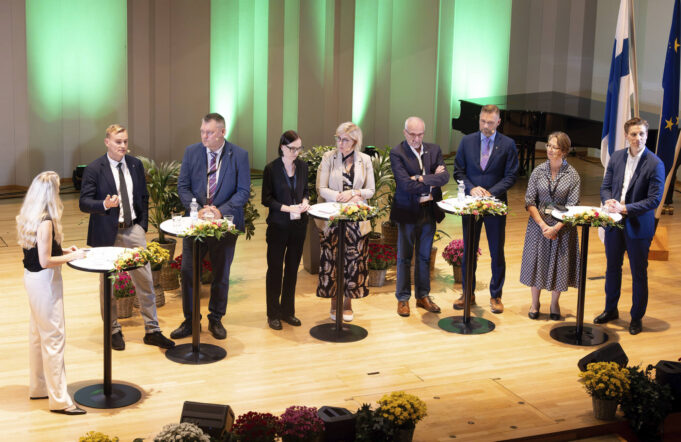
The Kouvola Security Conference is one of the cornerstones of Finnish security policy discourse since 2019. It provides an opportunity for decision-makers and experts in the security sector, together with citizens to share information and engage in dialogue on security policy issues.
In the past years, the Kouvola Security Conference has established its position as the foremost annual discussion forum in security policy in Finland. The Kouvola Security Conference has an important role to play in promoting the conversation about security issues.